By Em Mills
You were so small in my hands
no shrapnel could hit you,
but the dust and smoke of the bomb rushed into your lungs.
No need for any gauze.
They just closed your eyes.
No need for any shroud.
You were already
in your swaddle blanket.
– Mosab Abu Toha
Acclaimed Palestinian poet Mosab Abu Toha was a writer- in-residence at AUC last spring. Born in Gaza, Abu Toha graduated from the Islamic University of Gaza with a BA in English. Dedicated to providing and preserving access to literature, he campaigned in 2014 to collect book donations for what then became the Edward Said Library, Gaza’s first public library for English books. From 2019 to 2020, he was a visiting poet and librarian- in-residence at Harvard University, and he earned an MFA in poetry from Syracuse University in 2023.

His poems and essays, commended for their evocative voice and imagery, have been published internationally and have won numerous awards, including the Palestine Book Award, American Book Award and Derek Walcott Prize for Poetry. He was also a finalist for the Nationa Book Critics Circle Award, was awarded The Flora Lewis Award for his essays in The New Yorker and was named a Next Generation Leader by TIME magazine. His second book, Forest of Noise, was published in October.
For Abu Toha, literature plays an integral role in cultural preservation and intergenerational memory. “It’s important for me to write about my memory now because maybe in a few years, I will forget the details. Ordinarily, a person could visit a place that would remind them of the past, but Israel leaves nothing behind for us to return to,” he stated in a panel discussion at the inaugural AUC Tahrir CultureFest last spring.
The ability to not only remember but also share his experiences, life and memories with his children is also in danger, he explains. “Now, I’m 30 years old, and my oldest son is 8,” he says. “I would like to take them someday to where I grew up, to show them the school where I studied, where I used to play and introduce them to my oldest friends. But there is nothing left there — no friends, no houses, no neighborhoods, no schools, no universities or hospitals. They are destroying everything that would remind us and our children of what our lives used to be. That is why it’s so important to keep those memories alive.”
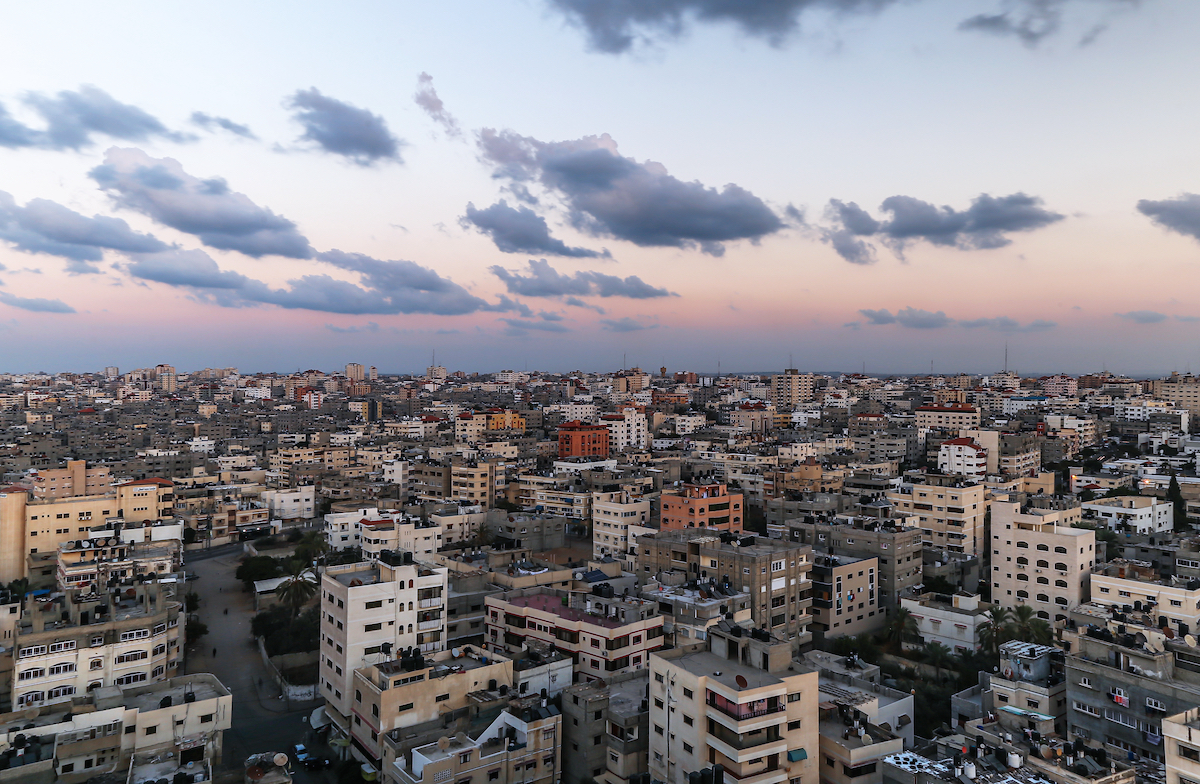
Throughout his work, Abu Toha reflects on his own experiences as well as those of his family and friends in Palestine, focusing on the details, interactions and emotions of daily existence under Israeli occupation.
By articulating these situations, he says, he keeps record of the devastation Palestine has been subjected to while also preserving the essence of what his life in Gaza was like.
They are destroying everything that would remind us and our children of what our lives used to be. That is why it’s so important to keep those memories alive.
“Home is something that reminds you of both your pain and joy. It reminds you of your childhood, of your sweet memories. It’s not necessarily only your parents; it could be your neighbors or friends,” he says. “It’s something you go back to when you feel sad and close the door, to forget all the pain you’re going through. No matter how long I’ll be living, whether in Cairo, the United States, Europe or anywhere, I will never forget that I should be in Gaza.”

Leave a Reply